Is Melamine Foam Suitable for EV Battery Pack Insulation? 熔喷聚酰胺泡沫适合用于电动汽车电池包绝缘吗?
Using the wrong foam inside an EV battery pack can increase heat transfer, absorb moisture, damage high-voltage components, and eventually cause electrical faults, customer complaints, or vehicle recalls.
The most effective solution is to use automotive-grade melamine foam only in validated thermal, acoustic, and secondary protection areas. Its open-cell thermoset structure provides low weight, sound absorption, thermal insulation, and inherent flame resistance. However, it must not be treated as a standalone thermal runaway barrier.
Why Can Conventional Foam Cause EV Battery Pack Failure?
A low-cost foam that melts, shrinks, absorbs liquid, or loses compression recovery can expose busbars and high-voltage wiring, leading to abrasion, insulation alarms, short circuits, or pack-level failure.
The correct solution is to select foam according to its actual function, environment, and validation standard. Engineers must evaluate temperature resistance, flammability, compression force, moisture behavior, chemical compatibility, vibration, cleanliness, and adhesive durability. A foam approved for vehicle interiors is not automatically suitable for a battery enclosure.
What Makes Melamine Foam Useful in EV Battery Systems?
Heavy insulation increases battery pack mass, while combustible acoustic foam can add unnecessary fire load close to high-voltage components.
Melamine foam provides a lightweight combination of acoustic absorption, thermal insulation, and flame resistance. BASF describes Basotect as a flexible, open-cell thermoset melamine resin foam with low weight and stable physical properties across a wide temperature range.[1] The material chars under flame exposure instead of melting and producing burning droplets.
EV Battery Requirement
Melamine Foam Benefit
Engineering Limitation
Weight reduction
Low-density open-cell structure
Density varies by grade and surface treatment
Thermal insulation
Reduces normal conductive heat transfer
Not a standalone thermal runaway barrier
Fire behavior
Thermoset structure does not melt into burning droplets
The complete laminate must still be tested
Noise control
Open cells absorb airborne sound energy
Does not replace structural vibration damping
Complex geometry
Can be cut, stamped, laminated, and thermoformed
Dust and dimensional tolerances require control
Moisture exposure
Hydrophobic treatment can be applied
Untreated foam can absorb moisture
Where Should Melamine Foam Be Used in an EV Battery Pack?
Installing foam against cell vents, sharp busbars, unsupported cables, or drainage channels can obstruct gas release and create abrasion, contamination, or electrical-clearance problems.
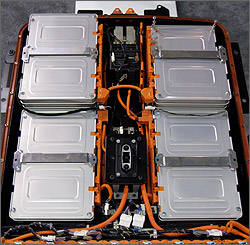
The safer solution is to position converted melamine foam in controlled secondary insulation and NVH areas. Typical applications include battery cover absorbers, protected enclosure cavities, cooling ducts, service covers, and the space between the pack and vehicle floor. Vent paths, drainage, creepage distance, cable bend radius, and connector access must remain unobstructed.
Can Melamine Foam Stop EV Battery Thermal Runaway?
Treating standard melamine foam as a complete thermal runaway shield can allow extreme heat, flame, particles, and vent gases to reach adjacent cells or the passenger compartment.
The correct solution is a multilayer protection system combining validated barriers, controlled venting, pack structures, sensors, and battery-management strategies. Melamine foam may reduce normal heat transfer and acoustic noise, but thermal runaway protection normally requires tested mica, ceramic, aerogel, intumescent, or composite barrier systems. UL Solutions evaluates propagation from cell to module and pack level because material performance cannot be confirmed from a raw-material data sheet alone.[3]
Which Tests Should EV Battery Melamine Foam Pass?
Relying only on a supplier data sheet can allow a material to pass incoming inspection but fail during vehicle vibration, fire exposure, immersion, thermal shock, or pack abuse testing.
The solution is to validate the finished converted component within the target battery assembly. Relevant programs may include UL 2580, IEC 62660-3, SAE J2464, SAE J2929, GB 38031, UN 38.3, and UNECE R100, depending on the vehicle and market.[3][4]
Validation Area
Recommended Check
Thermal behavior
Thermal conductivity, heat aging, shrinkage, and temperature cycling
Fire performance
Raw foam, adhesive laminate, and installed component testing
Mechanical durability
Compression recovery, vibration, abrasion, tear, and dimensional tolerance
Environmental resistance
Humidity, immersion, coolant, electrolyte, oil, and cleaning-fluid exposure
Electrical integration
Clearance, creepage, contamination, harness movement, and isolation monitoring
FAQ
Is melamine foam waterproof?
Untreated open-cell melamine foam can absorb water and change dimensions in humid battery environments
Specify hydrophobic treatment or a suitable protective facing where condensation or liquid exposure is possible. The finished part should be tested after immersion, humidity aging, and drying.
Can melamine foam touch battery cells?
Direct installation against cells can interfere with swelling allowance, cooling, venting, or thermal propagation control.
Use direct cell contact only after approval from the battery designer and completion of cell, module, and pack validation. Controlled gaps and dedicated thermal barriers are usually required around high-risk cell areas.
What temperature can melamine foam withstand?
Selecting material from a generic temperature claim can cause shrinkage or loss of performance in the final laminate.
Confirm the continuous and short-term temperature limits of the exact foam, adhesive, and facing combination. BASF reports that certain automotive Basotect grades can retain NVH properties at temperatures up to approximately 240°C, but this does not represent thermal runaway resistance.[2]
Is melamine foam better than polyurethane foam?
Choosing only by material name can produce either unnecessary cost or inadequate fire, acoustic, and moisture performance.
Compare the exact grades against the application requirements. Melamine foam is often preferred for low weight, sound absorption, and flame behavior, while polyurethane may offer different sealing, resilience, and cost advantages.
We use cookies to enable all functionalities for best performance during your visit and to improve our services by giving us some insight into how the website is being used. Continued use of our website without having changed your browser settings confirms your acceptance of these cookies. For details please see our privacy policy.