Publish Time: 2024-08-22 Origin: Site
Trailer wiring harness problems can disable brake lamps, turn signals, or running lights. Corrosion, damaged insulation, loose terminals, and poor grounds are common causes. Check the circuit before replacing the entire harness.
An incorrect connection can prevent the trailer from displaying the tow vehicle's lighting signals.
Match the harness connector and circuit functions to the vehicle and trailer.
A trailer harness carries lighting signals through wiring, terminals, and plugs. Some configurations also carry electric-brake control or auxiliary power. See the trailer wiring harness product range for product inquiries.
Unresolved wiring defects can produce intermittent lighting, blown fuses, or overheated contacts.
Inspect connectors, cable routes, and ground returns before replacing lamps.
Water and road salt accelerate connector corrosion; rubbing against frame edges damages insulation. A loose contact raises resistance, while exposed conductors may short together or against the chassis.
Corroded connectors: Moisture or damaged seals increase contact resistance.
Frayed wires: Abrasion, heat, and movement expose conductors.
Loose terminals: Weak retention causes intermittent supply.
Short circuits: Damaged insulation may blow a fuse.
Poor grounds: Rust or paint interrupts the return path.
Typical Trailer Connector Faults
Contaminated contacts
Exposed conductor
Intermittent circuit
Illustration 1: conceptual connector and wiring defects, not measured failures.
Replacing parts without locating the fault can leave a trailer's lighting inoperative.
Test the tow-vehicle socket first, then isolate the trailer connector, ground, and affected lamp circuit.
Use a circuit tester or multimeter according to the vehicle service procedure. Check each function by terminal position rather than wire color alone. A poor ground can cause dim, flickering, or cross-illuminating lamps.
If the vehicle socket tests correctly but lights fail when connected, check voltage drop under load. Test any electric-brake circuit separately; working lamps do not confirm brake operation.
Vehicle socket: Verify the required signals and ground.
Trailer plug: Check pins for moisture, corrosion, or looseness.
Ground path: Inspect clean metal contact or a dedicated return wire.
Cable and lamps: Trace power to the affected fixture and inspect insulation.
Lighting Fault Isolation Path
Illustration 2: diagnostic order, not a connector pinout or live-circuit wiring diagram.
Unprotected joints and cables can fail repeatedly after wet-weather towing.
Secure the harness away from sharp edges and heat, and protect properly assembled electrical contacts against moisture.
Inspect routing, strain relief, seals, and ground points before trips. Clean corroded contacts or replace damaged connectors; use dielectric grease only as the connector manufacturer directs. If a fuse blows repeatedly, isolate the short rather than fitting a higher-rated fuse.
After immersion or winter storage, remove debris and inspect connector seals. A weather-resistant housing still needs seated seals and suitable cable strain relief. Replace spread or damaged terminals rather than bending them back.
| Symptom | Possible Cause | First Check |
|---|---|---|
| Dim or mixed signals | High-resistance ground | Ground voltage drop |
| Intermittent lamp | Loose or corroded contact | Plug and terminals |
| Blown fuse | Short or overload | Wiring and circuit load |
An incompatible harness can leave auxiliary functions disconnected or overload vehicle circuits.
Match the connector layout, vehicle interface, conductor size, and circuit loads to the application.
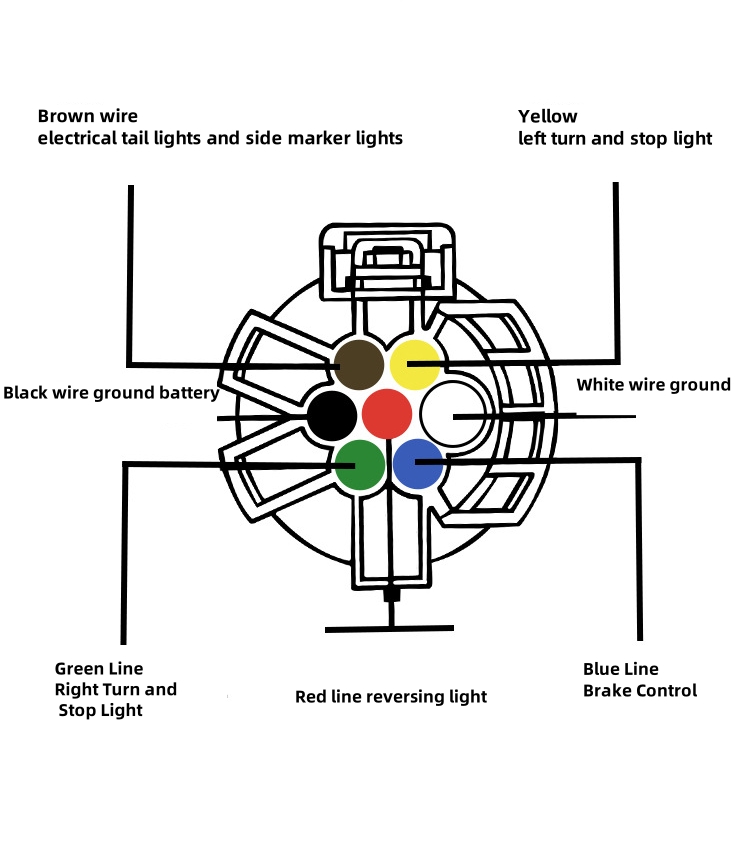
Four-way connectors commonly serve basic lighting, while six- and seven-way configurations support additional functions on some trailers. Confirm the actual pinout, trailer brake requirements, and environmental exposure. Some vehicles need an approved powered converter rather than direct splicing.
For a drawing review or quote request, send the pinout, load list, cable lengths, connector interface, and mounting conditions.
Why do trailer lights work only when the headlights are off?
Extra running-light load may expose a weak ground or voltage drop. Test both supply and return paths.
Should damaged trailer wires be spliced or replaced?
Follow the approved repair method; replace wiring with extensive corrosion or insulation damage.
Can a 7-pin adapter fix missing electric brakes?
No. The tow vehicle must supply the correct brake-control circuit and compatible connector wiring.
How often should trailer wiring be inspected?
Check lights and exposed wiring before towing, with closer inspection after water or road-salt exposure.
Is dielectric grease a substitute for cleaning terminals?
No. Restore sound electrical contact first, then use a compatible protective product as directed.
Diagnose trailer wiring harness problems by circuit function before replacing parts. For a technical evaluation, send the harness drawing, connector pinout, expected loads, and operating environment.
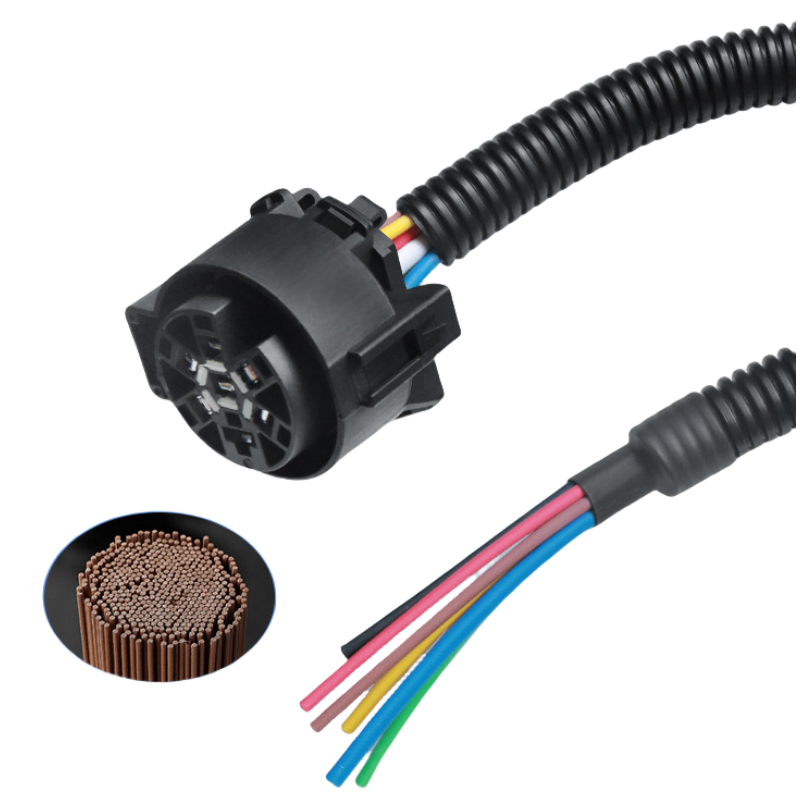
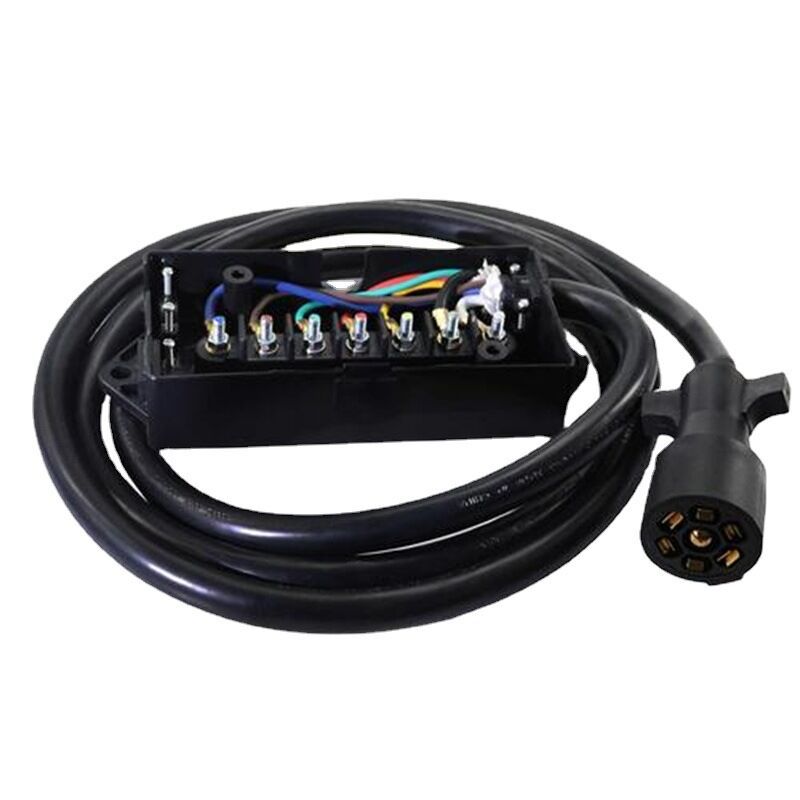
Original product photos: trailer harness image, wiring image, and connector image.
Explore trailer harness product information.
15 Years of Automotive Wire Harness Industry Experience
Our 15 Years of Automotive Wire Harness Industry Experience covers design, material selection, manufacturing, and quality-control considerations. Technical validation for customer projects should follow approved drawings, load requirements, and agreed inspection criteria.